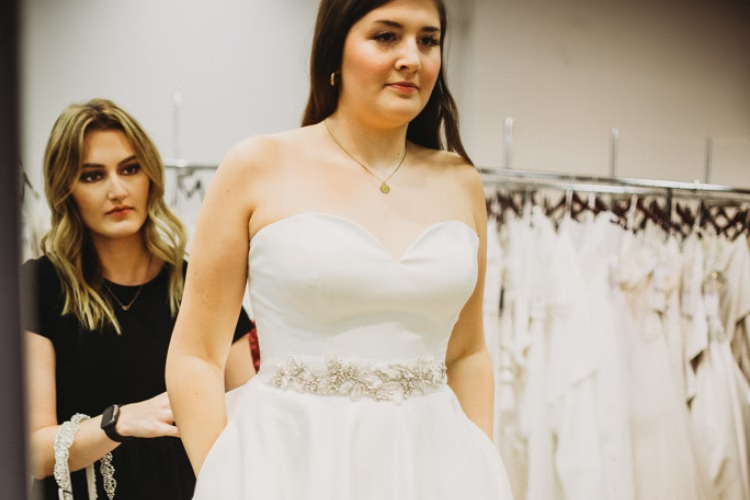
How to Coordinate the Bride and Groom’s Wedding Day Style
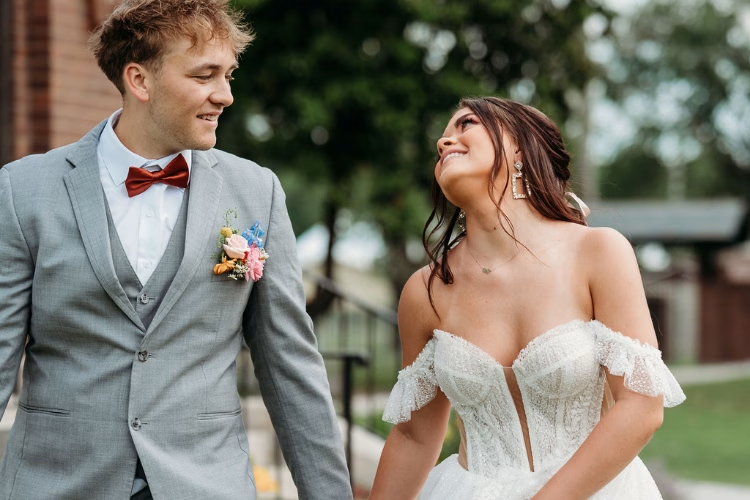
Your wedding outfits should look like they belong together, but that doesn’t mean you and your partner need to match from head to toe. The best bride and groom wedding style feels coordinated without losing the personality that makes each of you unique.
From choosing complementary colors to balancing formalwear with your wedding dress, a few thoughtful decisions can help you create a polished look as a couple. Here’s how to bring your wedding day outfits together while making sure you both feel confident in what you wear.
1. Start With Your Wedding’s Overall Style
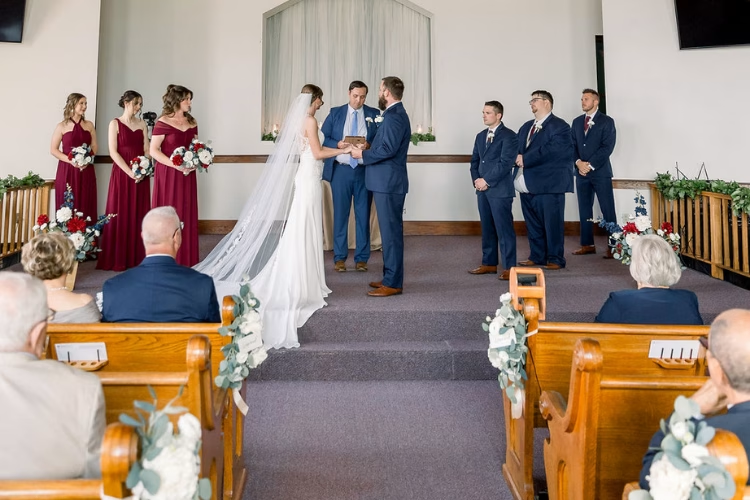
Before choosing your wedding dress or your partner’s suit, think about the atmosphere you want to create. Your venue, wedding theme, time of day, and level of formality can help guide your clothing choices.
For a black-tie wedding in a grand ballroom, a structured bridal gown paired with a classic tuxedo creates an elegant, formal look. A garden wedding might call for a flowing A-line gown and a lighter-colored suit, while a beach celebration could suit a relaxed wedding dress and breathable linen-blend formalwear.
Your outfits don’t need to reflect every detail of your wedding theme. Instead, use the overall aesthetic as a starting point for choosing silhouettes, fabrics, colors, and accessories that feel appropriate for the occasion.
Think about how you want to look together in your wedding photos, too. A cohesive style can make your portraits feel intentional without making either outfit look like an afterthought.
2. Choose Colors That Complement Each Other
Color is one of the easiest ways to coordinate your wedding day look. You don’t need to wear identical shades. In fact, complementary colors often create a more sophisticated result.
Start with your wedding dress and your partner’s suit, then consider how the smaller details can connect the two outfits.
Consider the Shade of Your Wedding Dress
Not all white wedding dresses have the same undertone. Some lean toward cool, crisp white, while others have warmer ivory, champagne, or soft cream tones.
If you’re wearing an ivory bridal gown, a bright white shirt might create a noticeable contrast beside it. That isn’t necessarily a problem, but it’s worth checking how the shades look together before finalizing your partner’s outfit.
Bring a fabric swatch or a photo of your gown when discussing suit colors and accessories. Seeing the pieces side by side can help you decide if they complement each other.
Coordinate Through Accent Colors
Your partner’s tie, pocket square, boutonniere, or vest can introduce colors that connect with your bouquet or other wedding details.
For example, if your bouquet features dusty blue flowers, your partner could wear a navy suit with a subtle blue pocket square. If your wedding palette includes sage green and ivory, a charcoal or tan suit with a coordinating boutonniere could complement the softer tones.
You don’t need to repeat your wedding colors in every accessory. One or two thoughtful accents are usually enough to create a connection without making the outfits look overly coordinated.
3. Balance Your Wedding Dress Silhouette With His Suit
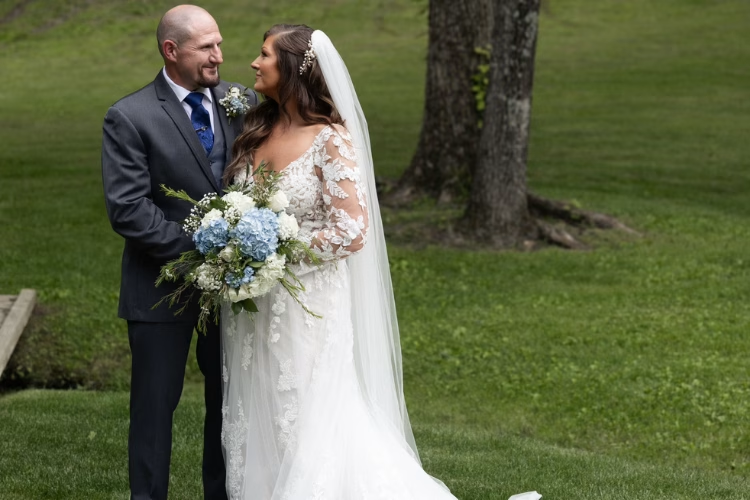
Your wedding dress and your partner’s formalwear have different design elements, but they should feel balanced when you stand beside each other.
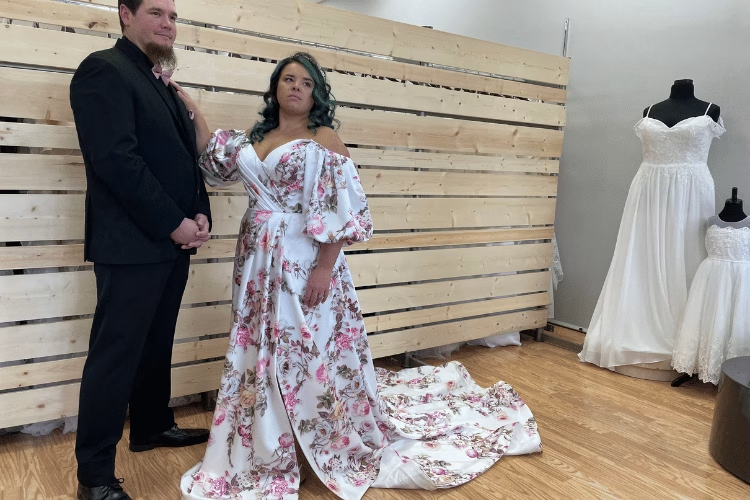
Consider the volume, structure, and visual weight of your gown. A dramatic ball gown with a full skirt creates a different impression from a sleek sheath dress or a fitted mermaid silhouette. Your partner’s suit doesn’t need to mirror your dress, but its cut and formality should feel appropriate alongside it.
For a structured ball gown, a well-tailored tuxedo or formal suit can complement the dress’s dramatic presence. If you’re wearing a minimalist satin gown, a clean-lined suit with a crisp shirt and understated accessories may create a similarly refined look.
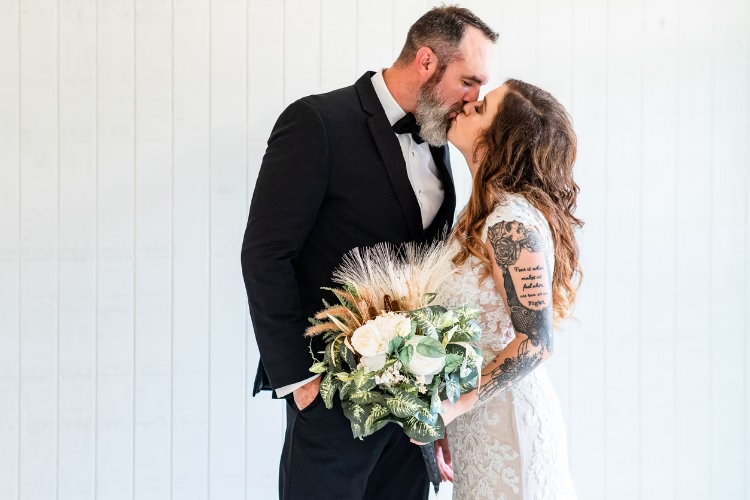
A fitted mermaid gown could pair beautifully with a sharp, tailored suit, while a romantic lace gown might work well with classic formalwear and a boutonniere that picks up a detail from your bouquet.
Fit matters just as much as style. Your gown should fit comfortably through the bodice and create the silhouette you want, while your partner’s jacket, trousers, and shirt should fit properly without pulling or bunching.
You don’t have to follow strict rules about which silhouettes belong together. Focus on the overall impression and how confidently you both wear your chosen outfits.
4. Pay Attention to Fabrics and Textures
Color and silhouette are important, but fabric can also influence how coordinated your outfits look.
A heavily embellished wedding dress has a different visual texture from a simple crepe gown. Similarly, a velvet dinner jacket creates a richer, more formal impression than a lightweight cotton suit.
You can use these differences to create contrast while keeping your outfits connected.
For example, a lace wedding dress paired with a classic wool suit can balance romantic detailing with clean tailoring. A sleek satin gown might look striking beside a textured dinner jacket, especially for an evening wedding.
You don’t need to match fabrics exactly. Instead, consider whether the materials suit the same occasion and work together visually.
Season and weather should also influence your choices. Lightweight fabrics can be more comfortable for an outdoor summer wedding, while heavier materials may suit a cool-weather celebration. If your ceremony and reception take place in different settings, consider how your outfits will feel throughout the day.
5. Coordinate Accessories Without Matching Everything
Accessories offer an easy way to connect your looks without changing the main pieces of your outfits.
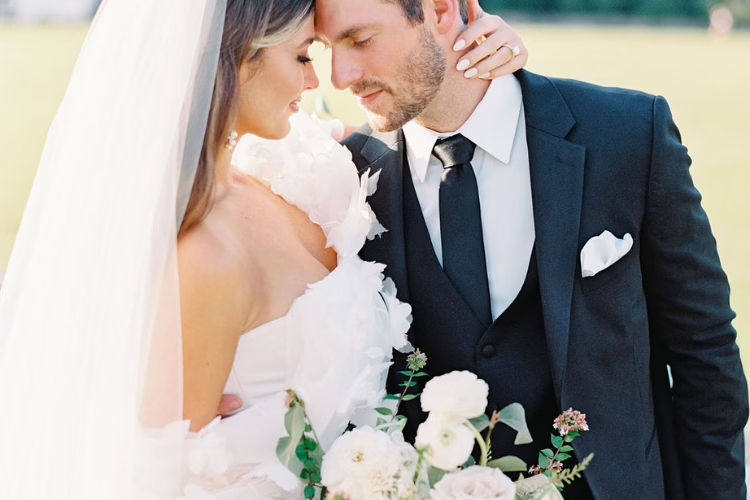
Your partner’s boutonniere could echo a flower from your bouquet, while a pocket square could complement the color of your bridal accessories. You might also coordinate metal tones, such as choosing gold details for both outfits.
Here are a few combinations to consider:
- Bouquet and boutonniere: Use similar flowers, colors, or greenery to create a subtle connection.
- Jewelry and formalwear details: Coordinate gold or silver accents if they suit both of your styles.
- Tie and bridal color palette: Choose a tie that complements your bouquet, bridesmaid dresses, or wedding colors.
- Shoes and finishing details: Consider the formality of your footwear and how it works with the overall look.
Remember that coordination doesn’t require identical accessories. Your partner doesn’t need to wear the exact shade of your bouquet, and you don’t need to choose jewelry to match the hardware on his outfit.
Choose details that feel natural to each of you. The goal is to create a cohesive appearance, not a collection of matching items.
6. Consider Formality When Choosing Your Outfits
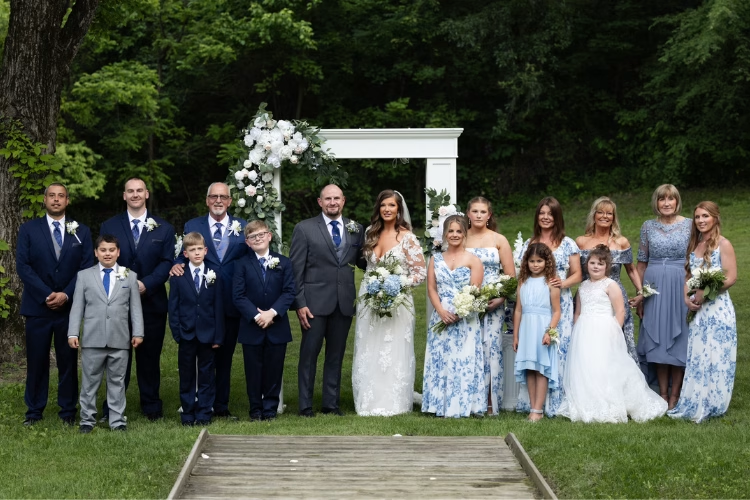
One of the easiest ways to make a couple’s wedding day style feel disconnected is to choose outfits with very different levels of formality.
For example, an elaborate cathedral-length bridal gown might feel out of place beside an informal suit with casual shoes. Likewise, a simple civil wedding dress could look perfectly appropriate with a relaxed suit, depending on the setting and your preferences.
Start by deciding how formal your wedding will be. A black-tie dress code generally calls for a tuxedo, while a formal wedding may suit a dark, well-tailored suit. A more relaxed celebration allows greater flexibility in suit colors, fabrics, and styling.
Your dress doesn’t have to be elaborate just because your partner is wearing a tuxedo. What matters is that both outfits make sense for the occasion and reflect the atmosphere you want.
If you’re unsure, compare the complete outfits rather than judging each piece separately. A dress, jacket, shoes, and accessories can look very different when styled together than they do on their own.
7. Make Room for Both of Your Personal Styles
Coordinating your wedding outfits shouldn’t mean giving up the details that make you feel like yourself.
If you prefer a romantic, embellished bridal gown and your partner gravitates toward minimalist formalwear, you can bring those preferences together through complementary colors and a shared level of formality. If you both love bold fashion, you might choose distinctive silhouettes or accessories while keeping the overall palette consistent.
Talk about what matters most to each of you. One person might care about the cut of the suit, while the other has a clear vision for the wedding dress. Understanding those priorities can help you make decisions without turning outfit planning into a competition.
It’s also worth considering cultural traditions, family expectations, and personal preferences. You can honor meaningful traditions while still making choices that reflect your relationship.
The best result isn’t necessarily the most perfectly matched couple. It’s two people who look comfortable, confident, and unmistakably themselves.
8. See the Complete Looks Together Before the Wedding
Even if you’ve chosen beautiful outfits individually, it’s helpful to review how everything works together before the wedding day.
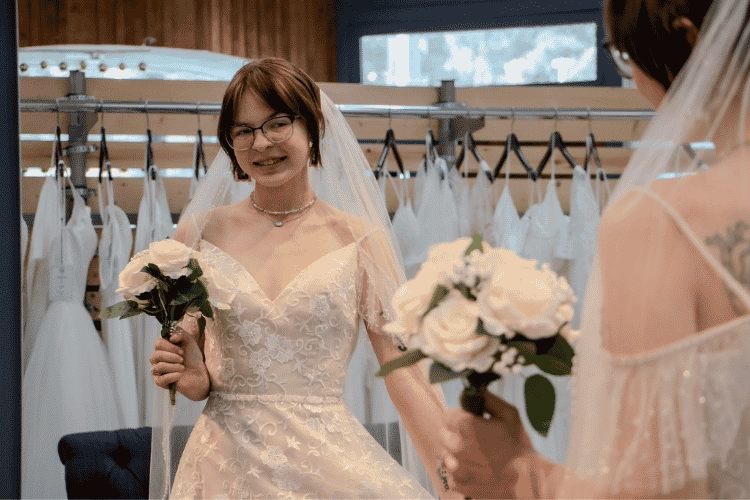
If possible, have your partner try on the complete suit, including the shirt, tie, shoes, and accessories, while you try on your gown with your veil, jewelry, and shoes. You can then compare the overall colors, textures, and level of formality.
Take photos in natural light as well as indoor lighting. Different lighting conditions can affect how white, ivory, and other colors appear, so a combination that looks perfect in a store may look different in your venue.
Create a Wedding Day Look That Feels Like You
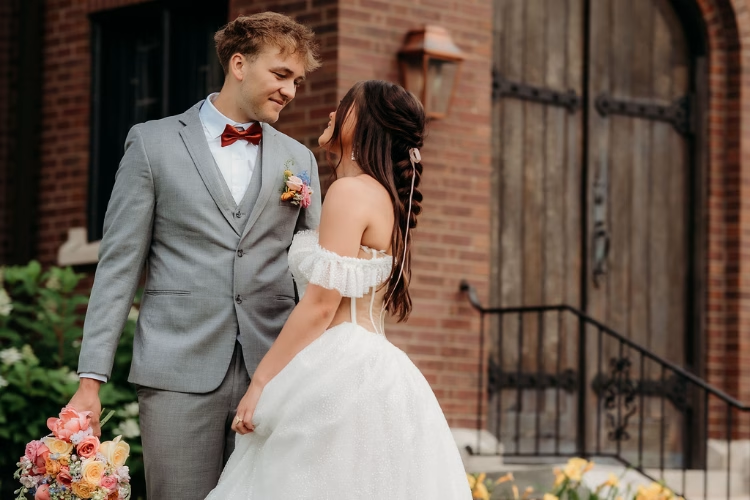
The best wedding day outfits reflect your individual styles while bringing your looks together as a couple.
As you plan your outfits, think about how your wedding dress and your partner’s attire will look together. At AJ Bridal, you can explore wedding dresses, suits, and tuxedos to find styles that complement each other while letting your individual personalities shine.
Ready to find your wedding day look? Book your appointment at AJ Bridal and explore the options for your celebration.